
The Western Environmental Law Center works to protect a great variety of imperiled wildlife native to the western U.S. Below is a list of some of those animals, but we advocate on behalf of many others as well. Click through on “More Cases” on the lower right for more information on our other work.
Gray Wolf
Our goal is to restore gray wolves in the wild throughout the lower 48 states, but especially in Washington, Oregon, Colorado, and California. We work to develop sound public policy that supports and encourages the return of gray wolves in the wild. We partner with conservation groups across the country and work with state and federal officials to achieve this goal.
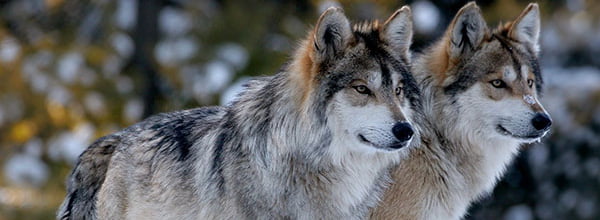
Mexican Gray Wolf
We have fought to protect the Mexican gray wolf of Arizona and New Mexico for decades, catalyzing the initial reintroduction effort. We successfully challenged an overzealous agency policy of lethally removing wolves from the wild following depredations on livestock, and continue to defend the reintroduction program against industry legal challenges. Our goal is to achieve full recovery of these wolves in the wild. We are working to preserve the victories we accomplished and are partnering with a coalition of Mexican wolf advocates to realize this goal.
Wild Salmon
We work to restore healthy salmon runs in the Pacific Northwest. Wild Pacific salmon are critical to coastal and freshwater ecosystems and many coastal economies, but many runs are now less than 10 percent of their historical size. Through collaboration and litigation, we focus our efforts on preserving and restoring freshwater habitat and spawning grounds. We work to stop ancient forest timber sales, instream mining, and off-road vehicle abuses that impair freshwater habitats. We also work on dam removals and improving hatchery and fish stocking operations that dilute the genetic integrity and increase smolt mortality.
Grizzly Bear
We’re working strategically to restore grizzly bears in the West. The U.S. Fish and Wildlife Service has repeatedly attempted to remove endangered species protection for grizzly bears in the Greater Yellowstone Ecosystem, claiming the bears have sufficiently recovered, despite scientific evidence to the contrary. Those bears are crucial to helping the other segmented grizzly populations across the West recover. When top predators are reduced or removed from an environment entirely, cascading effects can throw the natural order into disarray. The grizzly bear is one of these linchpins of our region.
Canada lynx
WELC is committed to helping this majestic cat thrive in the wild throughout the southern and northern Rocky Mountains. Canada lynx once ranged from Alaska to New Mexico, but due to a declining population were listed as threatened under the Endangered Species Act in 2000. In order to survive and recover in the wild, lynx need room to roam. We are protecting occupied lynx habitat and travel corridors, pushing the U.S. Fish and Wildlife Service to adopt and implement an adequate recovery plan, and ensuring that the U.S. Forest Service complies with the important forest protection designed to conserve lynx in the northern Rockies.
Northern spotted owl
The northern spotted owl is truly on extinction’s doorstep. The Trump administration eliminated a full third of the charismatic bird’s protected critical habitat – 3.4 million acres in Washington state, Oregon and California. We successfully challenged that in court to protect spotted owl critical habitat from logging and save the charismatic northern spotted owl from extinction. We are undertaking numerous cases to protect northern spotted owls from major logging projects in the Pacific Northwest—projects that would also destroy precious mature and old-growth forests the owl requires to survive. We’ve fought for northern spotted owls since our founding, and will continue to stand up for the owl until it fully recovers.
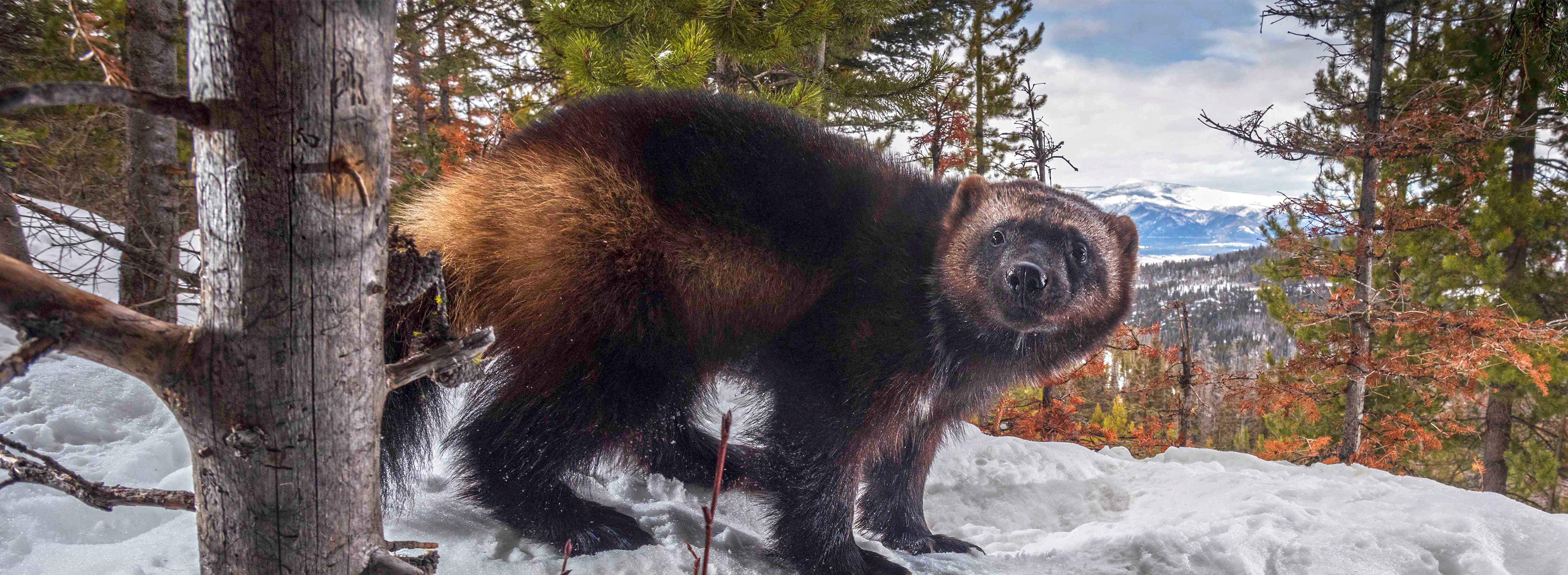
Wolverine
Featured Cases




Get Updates
Receive email updates on our work. We’d love to share our news with you.
 English
  Español de México